Two lighthouses, one light: Yamba’s historic twins
For more than 150 years, a succession of lights has blinked over the ocean to guide ships navigating the rugged northern NSW coast, evolving alongside the growing port town of Yamba.
Long before concrete towers and electric lamps, the earliest beacon here was humble: in the mid-1860s, mariners were aided by a simple kerosene lamp mounted on a platform or pole at the most easterly point of Pilot Hill. This rudimentary setup was intended to help vessels safely find the Clarence River bar at night, a notoriously difficult passage without clear visual markers.
In 1866, the lamp was upgraded to a small wooden “humpy” structure beside the flagstaff, using a larger kerosene lamp placed on a bench inside. A keeper opened shutters each night so its light could shine out to sea. While modest, this represented a key early attempt at formal navigation aid in the region.
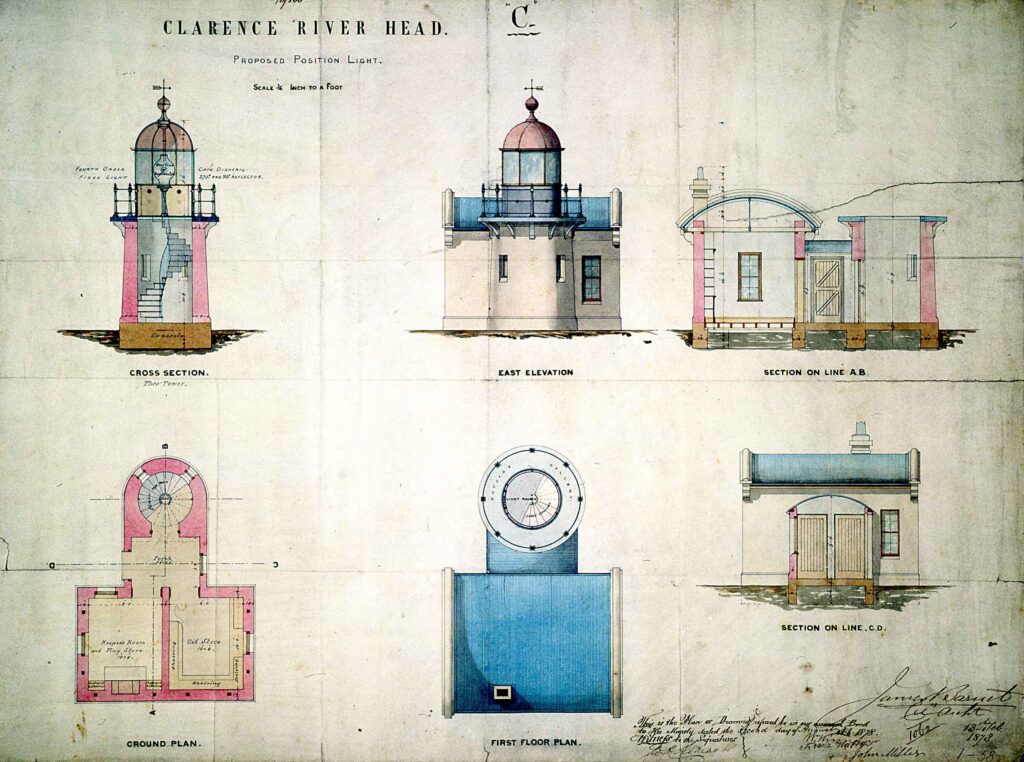
As coastal traffic increased and the need for a more reliable navigation mark became evident, colonial authorities acted. In 1878 tenders were called for a permanent purpose-built lighthouse, one of several along the NSW North Coast developed during this era. Constructed by W. Kinnear at a cost of £1,097, the resulting structure was completed around 1880. Designed as part of a group of short coastal lights by famed colonial architect James Barnet, this original Clarence River Lighthouse was about 7 metres tall and visible for approximately 6 nautical miles. A keeper’s cottage was built nearby, and for decades the light was an essential part of marine safety at the Clarence River entrance.
For the first half of the 20th century the original lighthouse dutifully served Yamba. By 1920 however it was automated—switching from manual operation to acetylene gas and eliminating the residency of keepers. This was part of a broader trend across Australia as lighthouse technology advanced and the need for full-time keepers diminished.
With modernization, however, came new challenges. The construction of the Pacific Hotel in the 1930s and later a substantial water reservoir on Pilot Hill meant that the old lighthouse’s beam was increasingly obscured for incoming ships. By the early 1950s it was clear a new navigational solution was required.
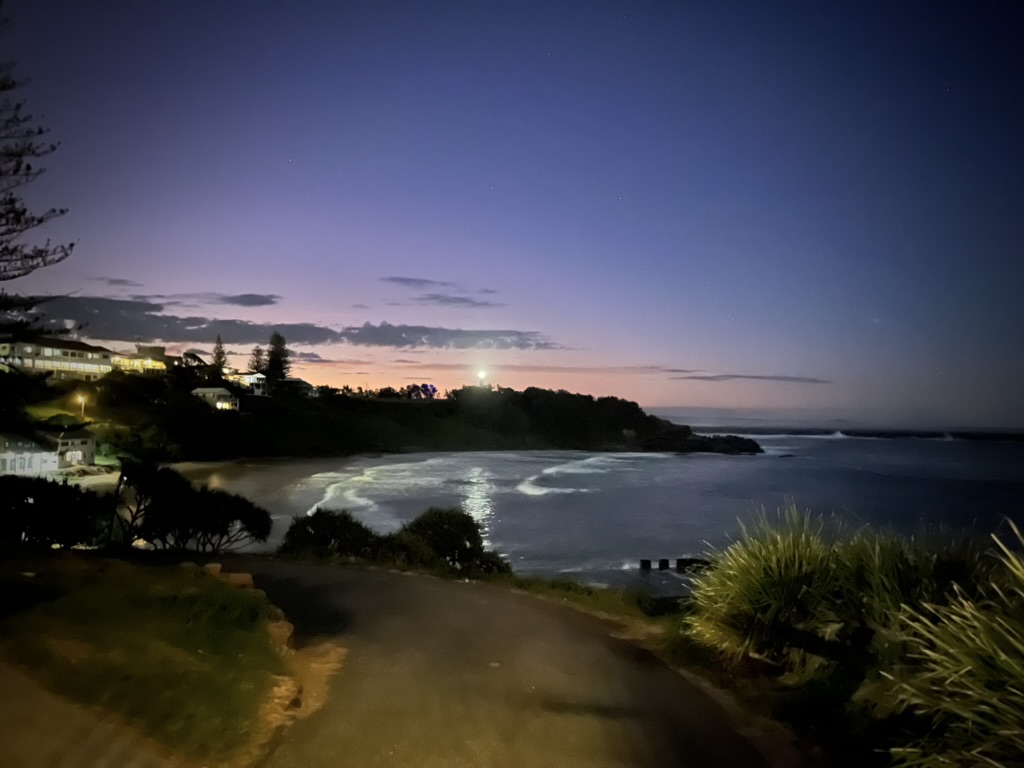
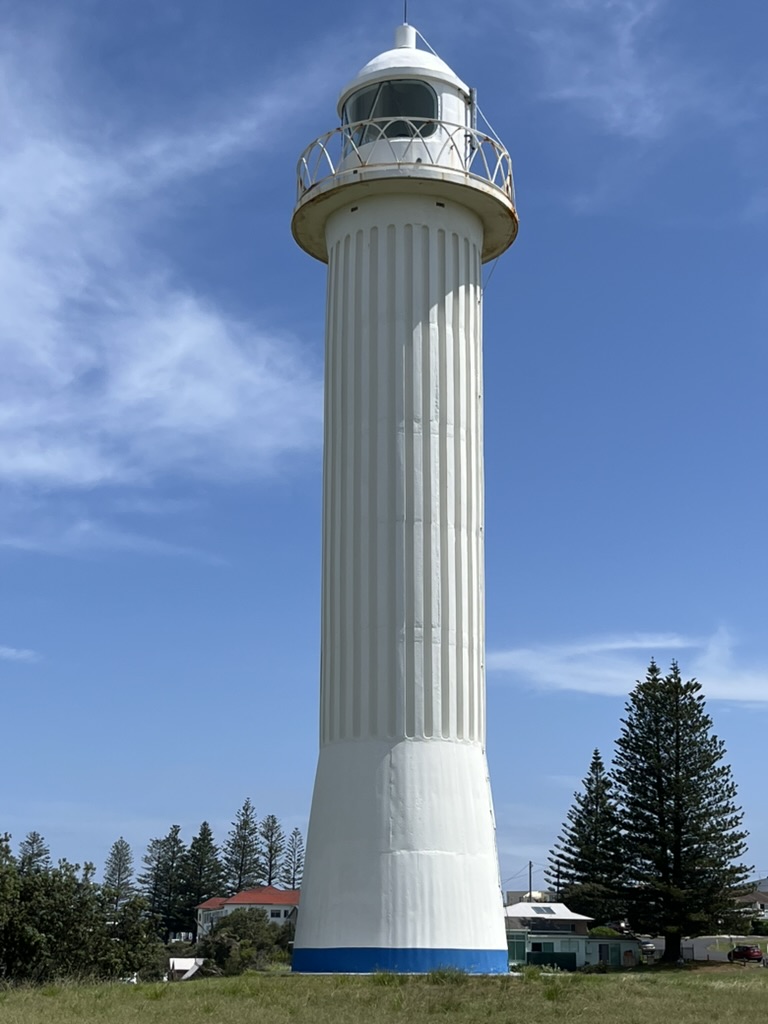
In response, a new lighthouse was commissioned. Built by the Boulder Construction Company and first lit on 21 December 1955, this structure was a tall, modern reinforced concrete tower, about 17–18 metres high, situated on the extreme eastern point of Pilot Hill to ensure an unobstructed range. The lantern was powered by mains electricity, supported by backup acetylene, and reused the optical apparatus from the older light. In clear conditions, its beam could reach up to 33 km (about 18 nautical miles) out to sea—a significant improvement on its 19th-century predecessor.
Following the commissioning of the new lighthouse, the 1880 lighthouse was demolished in 1956. The land was used for the town’s water reservoir, which itself was demolished in 1980, leaving behind a site layered with utilitarian and maritime history.
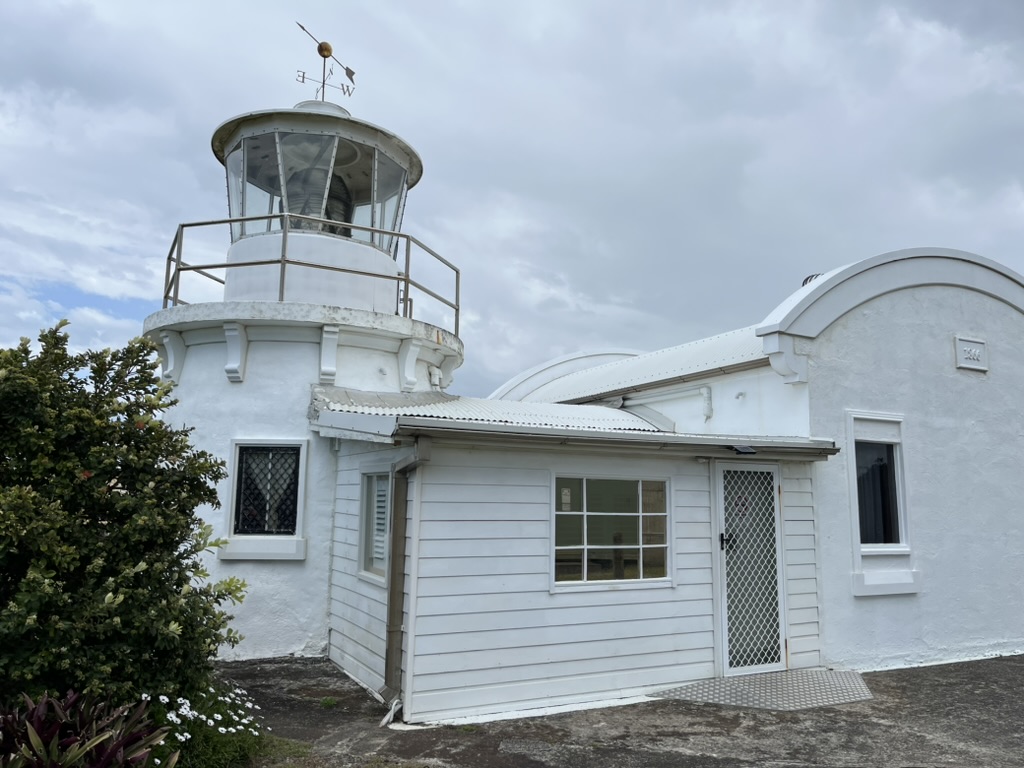
Community memory and heritage efforts have kept the story alive. In the late 1980s, local volunteers from the Lower Clarence Media Co-operative built a replica of the original 1880 lighthouse on its former site using recycled bricks and later outfitted it to house the Yamba Community Radio Station 2TLC-FM. A later community-led project saw the replica fitted with an actual lighthouse lens, further honouring its maritime origins.
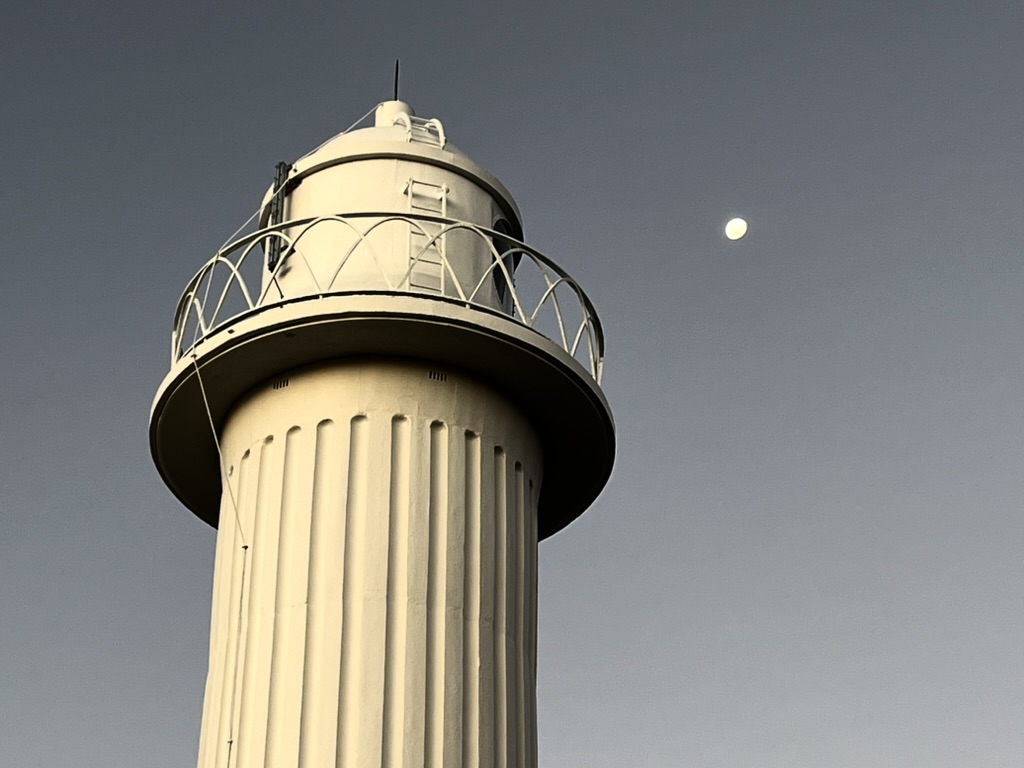
Today, the current Clarence River Light—still active under the Australian Maritime Safety Authority—continues its practical role, while the replica of the original lighthouse stands as a testament to local dedication to preserving Yamba’s nautical past. Both structures reflect how a coastal community has engaged with—and cherished—its seafaring history on Pilot Hill.