Famous lighthouses: Cabo de São Vicente Lighthouse
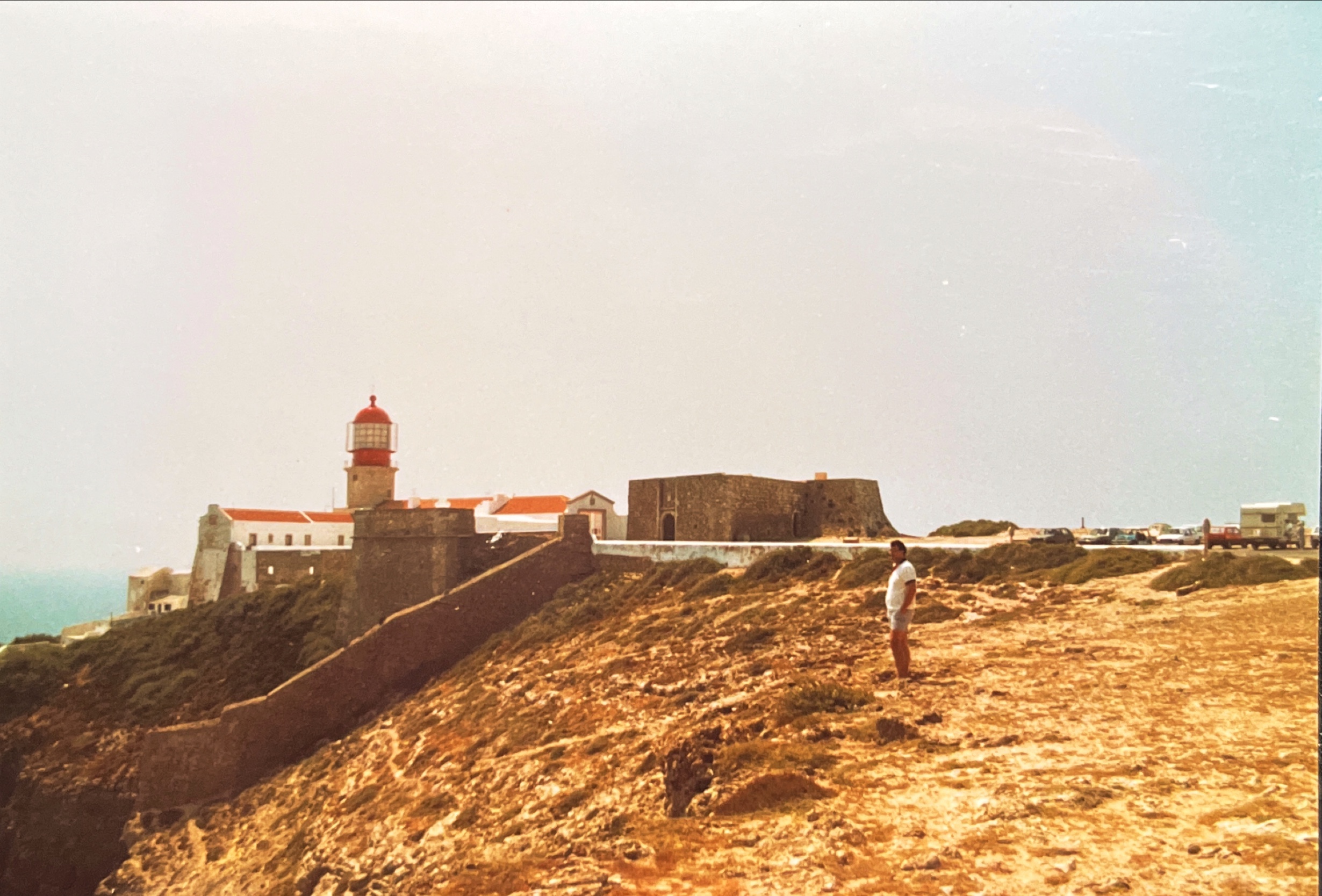
At the extreme southwestern corner of Europe, where the ancient continent meets the Atlantic Ocean in a dramatic collision of land and sea, stands the Cabo de São Vicente Lighthouse. Perched on sheer cliffs that plunge 75 meters into churning waters, this powerful beacon marks one of the most significant maritime waypoints in history—a place where sailors for millennia have turned their ships northward toward Europe or southward toward Africa, guided by what was once considered the edge of the known world.
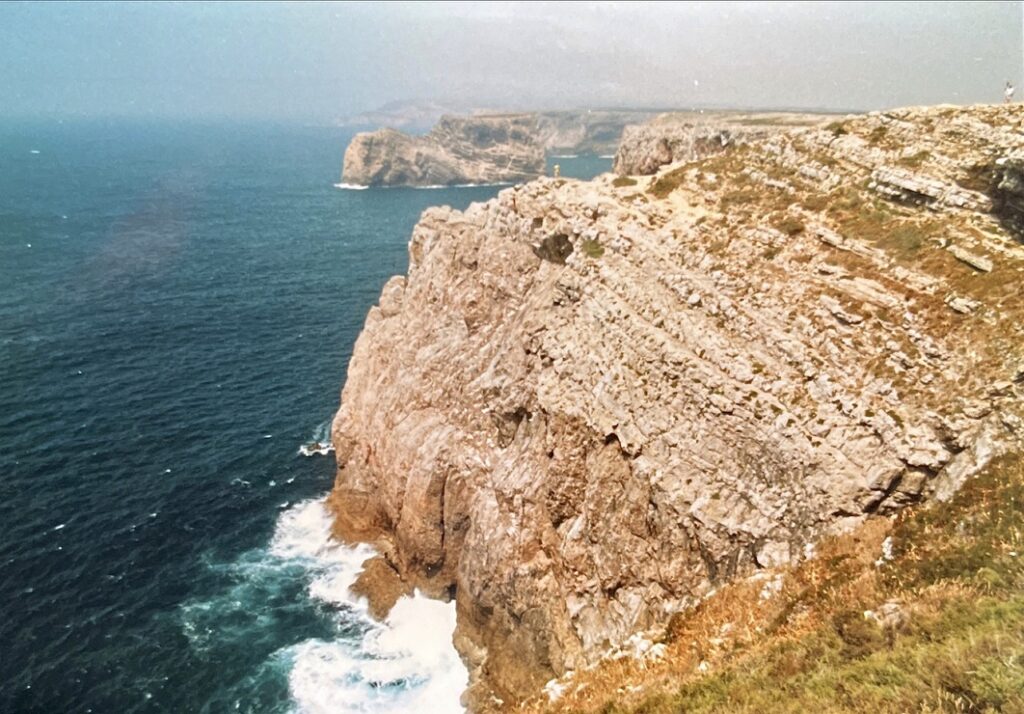
The cape itself, named after Saint Vincent of Saragossa whose relics were supposedly brought here in the 4th century, has held mystical significance since antiquity. The ancient Greeks and Romans considered it a sacred promontory, calling it Promontorium Sacrum. Medieval sailors believed this was the end of the world, where the sun sank into the sea each evening. The importance of marking this critical navigational point was recognized early, though the current lighthouse is a relatively recent addition to centuries of maritime history.
The first lighthouse at Cabo de São Vicente was constructed in 1846, during a period when Portugal was modernizing its coastal defenses and navigation aids. The original structure was built atop the ruins of a 16th-century Franciscan convent that had itself been constructed on the site of an even older fortress. This layering of history—ancient sacred site, medieval fortress, Renaissance convent, modern lighthouse—reflects the cape’s enduring strategic importance.
The 1846 lighthouse was a modest affair by today’s standards, but it represented a significant achievement for mid-19th century Portugal. The light was powered by olive oil lamps with reflectors, visible for approximately 30 kilometers in clear conditions. Given the cape’s position at the convergence of shipping lanes between the Mediterranean, Northern Europe, Africa, and the Americas, even this relatively modest range made it an essential navigational aid.
However, the original structure proved inadequate for such a critical location. In 1897, a more substantial lighthouse was built, incorporating new technology and greater power. This second lighthouse featured a more powerful optic system and stood taller, increasing visibility. Yet even this proved insufficient for one of Europe’s most important maritime crossroads.
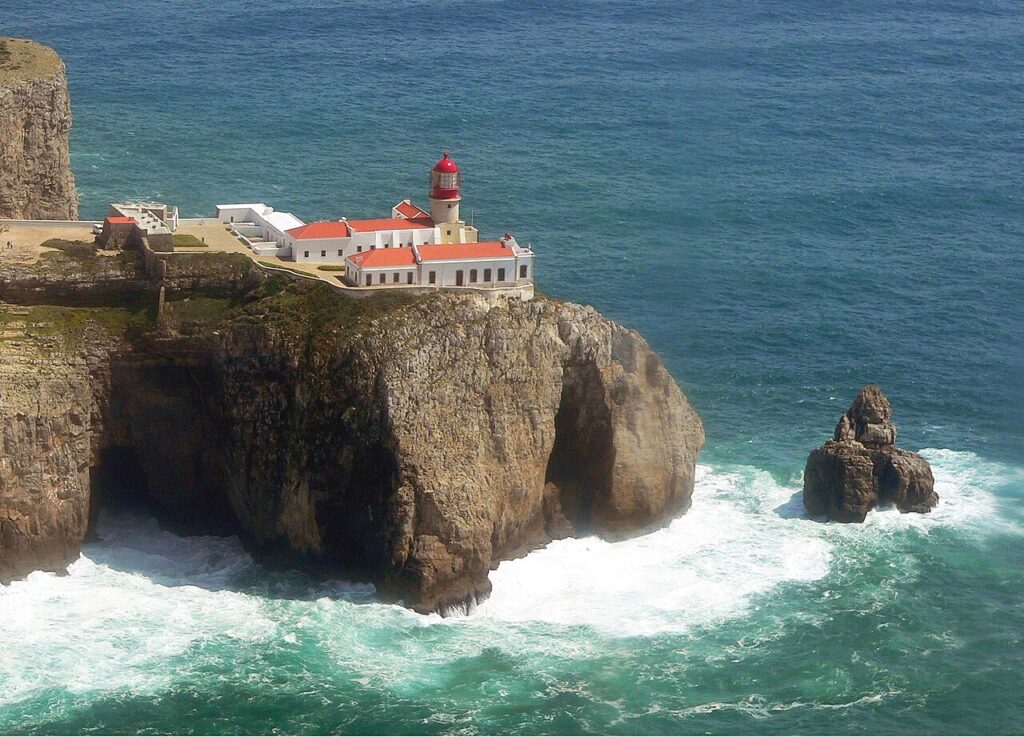
The current lighthouse, completed in 1908, represents the culmination of lighthouse engineering at Cabo de São Vicente. Standing 24 meters tall, with its light elevated 86 meters above sea level due to the dramatic cliff location, it houses one of the most powerful lights in Europe. The lighthouse was equipped with a first-order Fresnel lens and a rotating mechanism that produced a distinctive flash pattern, making it unmistakable to mariners approaching from any direction.
The light’s range is extraordinary—on clear nights, it can be seen from 60 kilometers away, one of the longest ranges of any lighthouse in the world. This immense power is necessary given the cape’s role as a turning point for vessels. Ships rounding Cabo de São Vicente need early warning to adjust their course, particularly when battling the strong currents and frequent storms that characterize this exposed coastline.
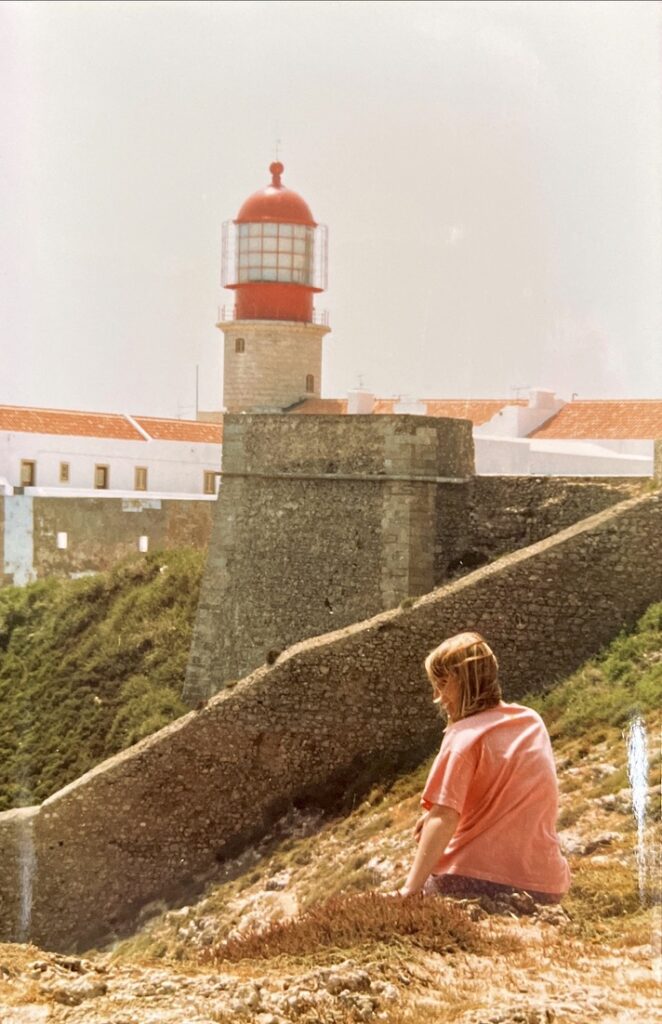
The lighthouse’s distinctive red cylindrical tower stands in stark contrast to the white buildings of the complex, which includes the keepers’ quarters and support facilities. The entire compound clings to the windswept clifftop, surrounded by sparse vegetation adapted to constant Atlantic gales. The landscape is raw and elemental—limestone cliffs, crashing waves, endless horizons, and skies that seem larger here than anywhere else.
Life as a keeper at Cabo de São Vicente was demanding but came with a certain prestige. This was one of Portugal’s most important lighthouse stations, and keepers stationed here were responsible for one of Europe’s critical navigation aids. They endured fierce winds, isolation, and the constant roar of waves far below, but they also witnessed some of the most spectacular sunsets in Europe, as the sun sank into the Atlantic exactly as ancient sailors had described.
The lighthouse was automated in the late 20th century, ending the era of resident keepers. Today, it continues its vital work, monitored remotely but maintained regularly. The site has also become a major tourist destination, with visitors flocking to experience the dramatic scenery and stand at Europe’s southwestern edge.
A small museum now occupies part of the lighthouse complex, telling the story of Portuguese maritime history and lighthouse technology. Visitors can tour the grounds, though the tower itself remains operational and closed to the public for safety and security reasons.
Cabo de São Vicente Lighthouse stands as a powerful symbol of humanity’s relationship with the sea. For over a century and a half, its light has pierced the Atlantic darkness, guiding ships safely past this historic cape. In an age of GPS and digital navigation, the lighthouse remains operational, a testament to the enduring importance of visual navigation aids and the recognition that at the edge of Europe, where land meets ocean in timeless confrontation, a light must always burn to guide sailors home.