
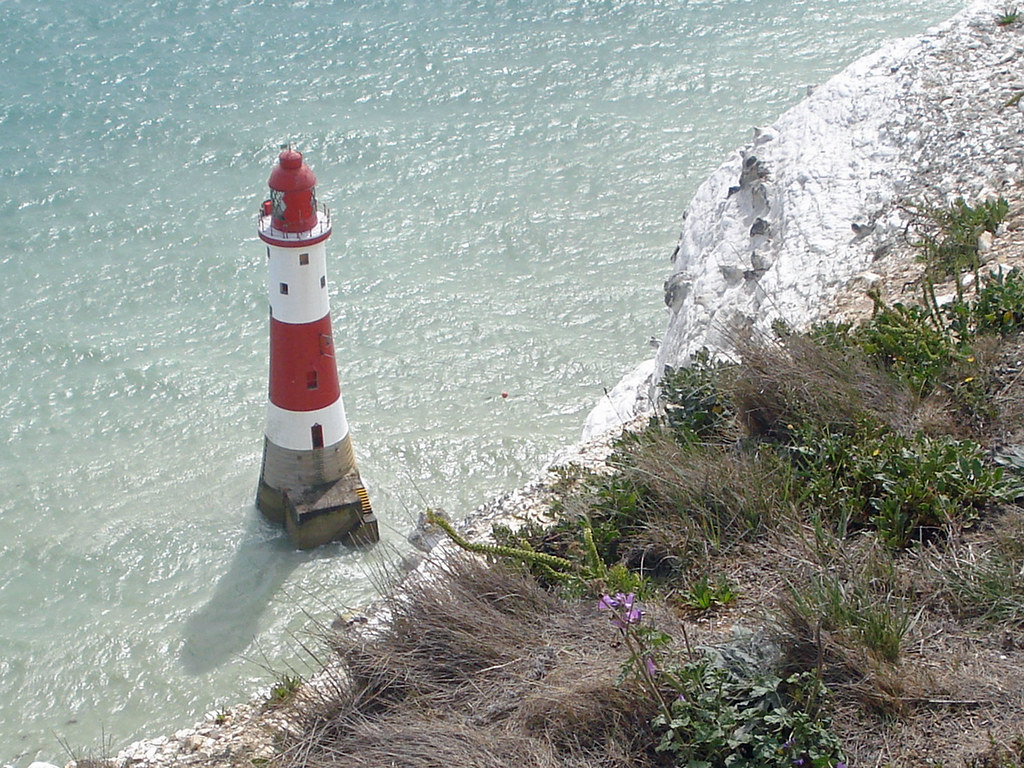
Perched dramatically at the base of England’s highest chalk sea cliff, Beachy Head Lighthouse stands as one of Britain’s most iconic maritime landmarks. This is probabky where my love affair with lighthouses began as a child, with family holidays in nearby Pevensey Bay. This striking red and white striped tower, rising from the wave-battered rocks beneath the famous white cliffs of East Sussex, has guided ships through the treacherous waters of the English Channel since 1902, and its history reflects the evolution of lighthouse engineering and the enduring human commitment to maritime safety.
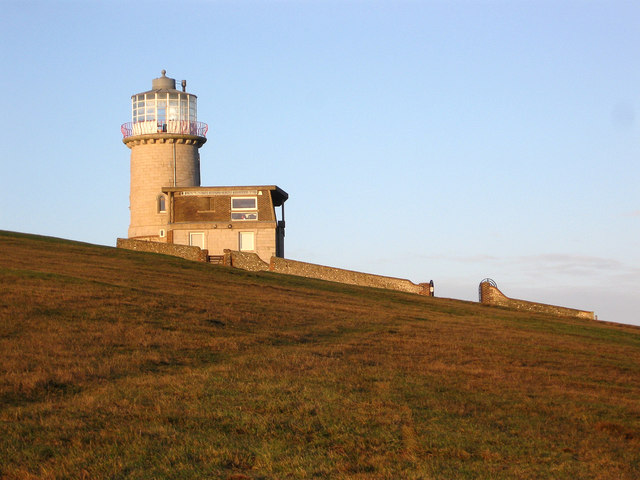
The story of Beachy Head Lighthouse actually begins with its predecessor, Belle Tout Lighthouse, built in 1834 atop the cliff itself, some 280 feet above sea level. While this elevated position seemed logical, it proved problematic. The lighthouse stood so high that fog and low cloud frequently obscured its light from the ships below—precisely when vessels needed guidance most. After decades of complaints from mariners about its unreliability, authorities realized a fundamental redesign was necessary./
The decision was made to build a new lighthouse at the cliff’s base, directly in the sea. This was no small undertaking. The location presented extraordinary engineering challenges: the structure would need to withstand the full force of Channel storms, be built on an unstable chalk platform, and rise high enough to be visible from a distance yet low enough to remain beneath typical fog levels.
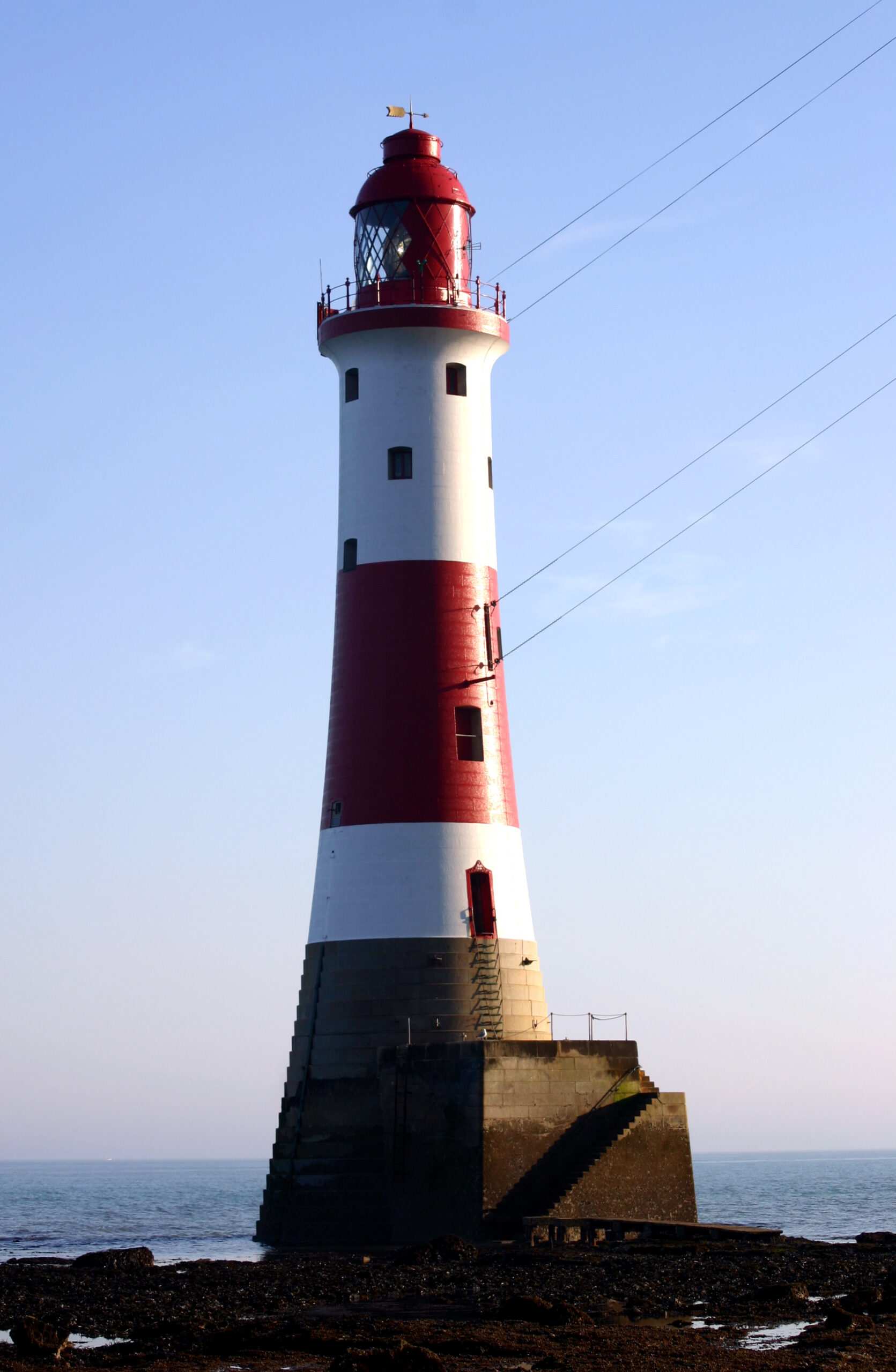
Construction began in 1899 under the direction of Sir Thomas Matthews, Engineer-in-Chief to Trinity House, the organization responsible for Britain’s lighthouses. The design called for a circular granite tower, 43 meters tall, built on a concrete and granite base blasted and carved from the chalk seabed. Workers could only access the site during low tide and calm weather, making progress slow and dangerous. The harsh conditions and exposed location meant construction took nearly three years to complete.
When Beachy Head Lighthouse was finally lit on October 2, 1902, it represented a triumph of Victorian engineering. The distinctive red and white bands—painted in 1956—made it easily identifiable by day, while its powerful light could be seen for 16 nautical miles. The lighthouse was initially powered by paraffin vapor burners, which required constant attention from resident keepers who lived in the tower itself, rotating in shifts.
Life for the lighthouse keepers was extraordinarily isolated and demanding. They lived in cramped quarters within the tower, accessible only by boat when weather permitted. Supplies had to be carefully timed with tides and conditions. Keepers maintained meticulous logs, polished lenses, trimmed wicks, and ensured the light never failed—their vigilance was all that stood between ships and the deadly rocks. Stories from this era speak of keepers enduring weeks of confinement during winter storms, when waves crashed over the lantern room 141 feet above sea level.
The lighthouse underwent significant modernization over the decades. In 1983, it was converted to electric power, connected to the mainland by an underground cable. More significantly, in 1983 it became fully automated, ending the era of resident keepers. The last keepers departed, and the lighthouse joined the growing number of unmanned stations around Britain’s coast.
Today, Beachy Head Lighthouse continues its vital work, now monitored remotely by Trinity House. While technology has advanced—GPS and radar dominate modern navigation—the lighthouse remains an important aid to shipping and a backup when electronic systems fail. It’s also become a cherished landmark, featured in countless photographs with the dramatic white cliffs soaring behind it.
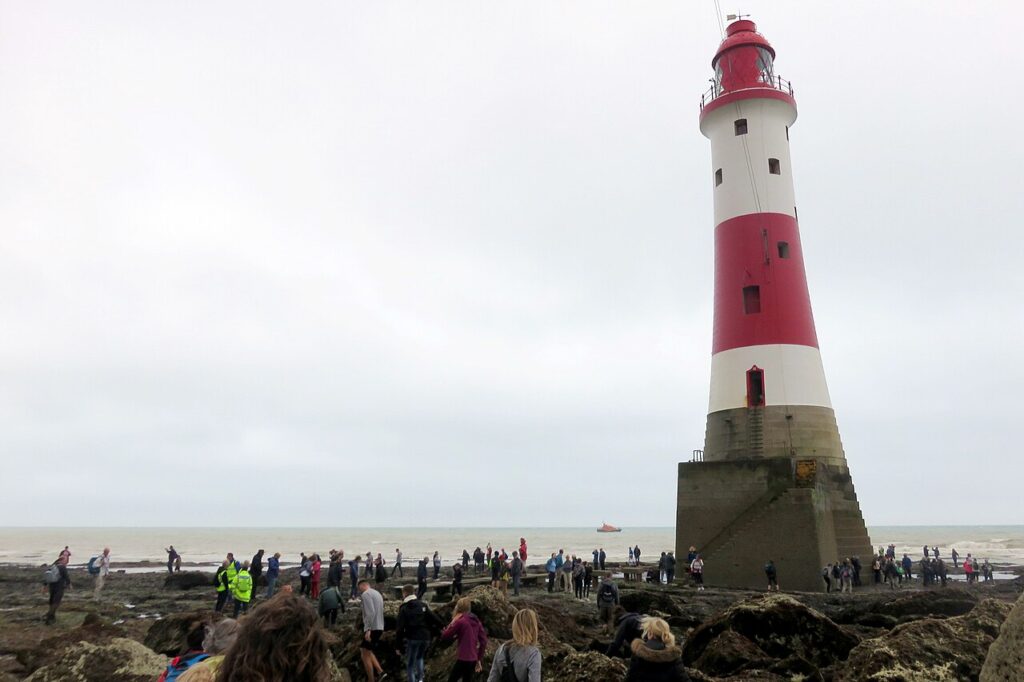
The lighthouse stands as a testament to human determination to make the seas safer, representing over a century of service. Its lonely vigil continues, a beautiful reminder of maritime heritage and the age when keepers devoted their lives to keeping the light burning through every storm and fog that rolled across the Channel.
Leave a Reply