
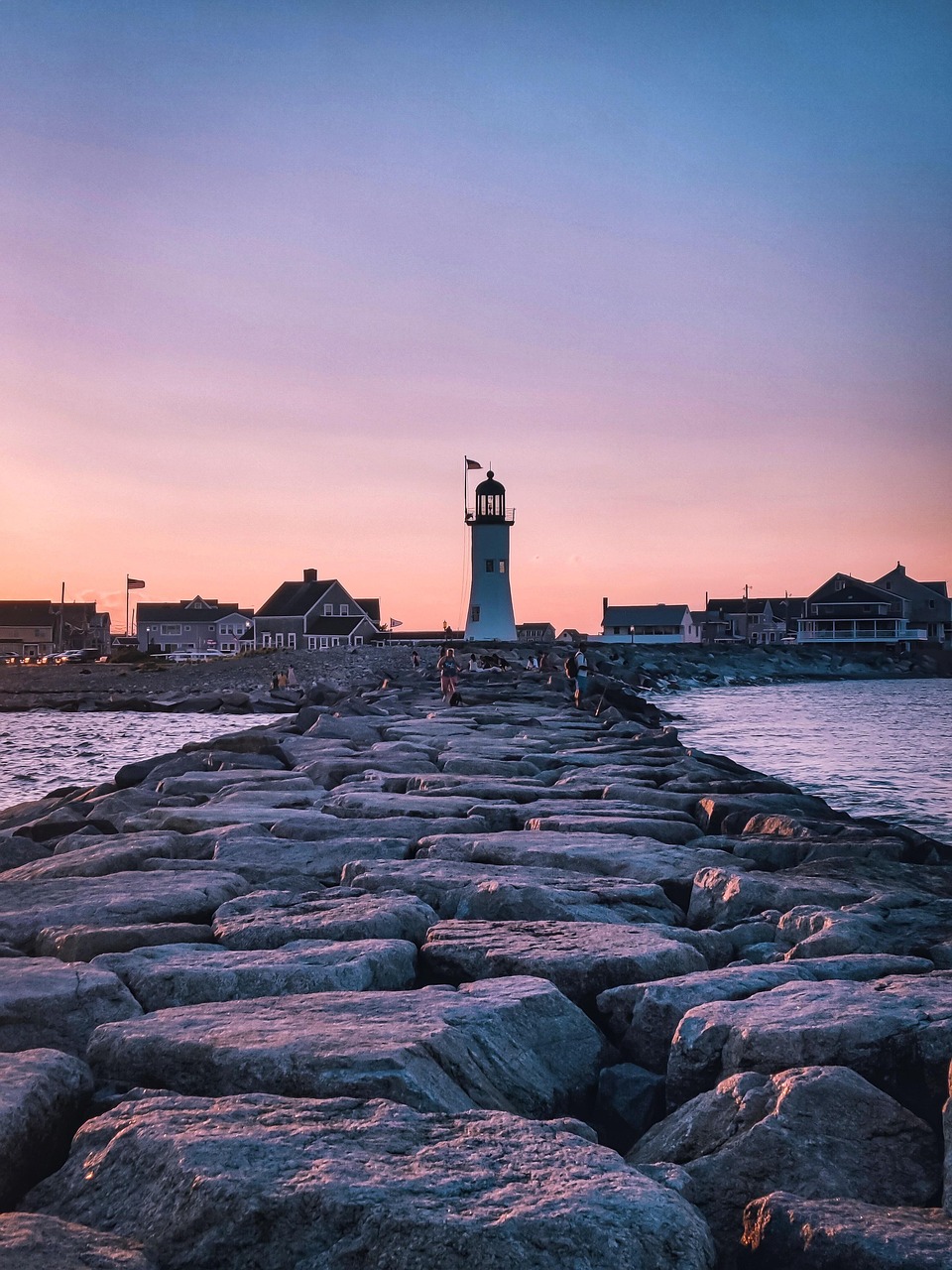
For centuries, lighthouses have stood as steadfast sentinels along treacherous coastlines, guiding mariners safely through dangerous waters. Yet constructing these vital navigational aids presents some of the most daunting engineering challenges imaginable, requiring builders to overcome hostile locations, extreme weather, and the relentless assault of the sea itself.

The first critical challenge lies in site selection and foundation construction. Lighthouses must be positioned where they’re most needed—often on isolated rocky outcrops, shifting sandbars, or directly in the open ocean. Each location type demands its own solution. Rock-based lighthouses require careful surveying to identify stable bedrock, followed by the painstaking task of leveling the irregular surface. Workers must often blast away portions of rock to create a suitable platform, all while contending with crashing waves that can sweep crews and equipment into the sea.

Offshore lighthouses present even greater difficulties. The Eddystone Lighthouse off the coast of Cornwall, rebuilt multiple times since 1698, exemplifies this struggle. Early wooden structures were destroyed by storms and fire. The breakthrough came with John Smeaton’s 1759 design, which introduced the dovetail joint technique for stone blocks. Each carefully cut granite block interlocked with its neighbors, creating a structure that grew stronger under pressure from waves rather than being torn apart. This revolutionary approach influenced lighthouse construction for generations.
Foundation stability on sandy or muddy seabeds requires different strategies entirely. Engineers developed caisson foundations—large watertight chambers sunk into the seabed and filled with concrete. The caisson method, perfected in the nineteenth century, involved floating these massive structures to the site, carefully positioning them, then pumping out water while workers excavated below, digging until they reached solid material. This dangerous work claimed many lives, as men labored in compressed air environments that caused decompression sickness, then known as “the bends.”
The materials and construction methods evolved dramatically over time. Early lighthouses used whatever local materials were available—wood, stone, or brick. However, exposure to salt spray, storm damage, and the sheer force of waves crashing against structures demanded more robust solutions. Cast iron became popular in the mid-1800s, allowing for prefabricated components that could be assembled on-site. This innovation proved particularly valuable for remote locations where transporting large stone blocks was impractical.
Wave dynamics presented perhaps the most formidable engineering puzzle. Builders learned through tragic failures that vertical walls simply invited destruction, as waves striking flat surfaces generated enormous destructive forces. The solution emerged in carefully calculated curves and tapers. The classic lighthouse profile—wider at the base, tapering toward the top—isn’t merely aesthetic; it deflects wave energy upward and allows water to flow around the structure rather than delivering punishing direct impacts.
Weather windows for construction were often brutally short. In many locations, builders could only work during calm summer months, making projects drag on for years. Supply logistics compounded difficulties. Everything from food and fresh water to building materials and tools had to be transported to remote sites, often by small boats navigating the same dangerous waters the lighthouse was meant to protect. Workers frequently lived on-site in harsh conditions, isolated from their families for months.

Modern lighthouse construction benefits from advanced materials like reinforced concrete, computer modeling of wave forces, and helicopter transport for remote sites. Yet the fundamental challenges remain largely unchanged: working in hostile marine environments, anchoring structures to unreliable substrates, and building to withstand centuries of punishment from the sea.
These remarkable structures stand as testaments to human ingenuity and determination. Each lighthouse represents countless hours of dangerous labor, innovative problem-solving, and the unwavering commitment to protecting lives at sea—engineering achievements as much as navigational tools.
Leave a Reply